The book I chose was Thinking Fast, and Slow.
1. The general theme or argument of the book was that when it comes to considering judgements and choices, a human goes through two systems of thought. The first is a sudden, and automatic response by the brain. The second system is slower and more deliberate.
2. This book connected with our class in many ways. For starters, the whole book is predicated on making the right decisions based off of what you are given. You must strategically decide on things throughout your life, especially in the business world. In order to be a good entrepreneur, you must be good at System number two, something Kahneman hits on throughout the book.
3. If I were design an exercise for this class based off this book, I would create ten situations and ask the students to do two things: Provide an initial response for each situation. And then after that, deeply think about each situation for ten minutes, and develop a new response for each situation. Then, compare how different each of your answers were.
4. The biggest "aha" moment for me was regarding doubts. I was surprised to find out that System 1 cannot really experience doubts. However, System 2 is when you start to get into some problems with doubting yourself.
Monday, November 5, 2018

Monday, October 29, 2018
20A
Person number 1:
1. The first person I met is Randy. Randy is the owner of the arcade bar in Downtown Gainesville.
2. I am fitting the domain expert for this person. He owns something that I wish to open up for myself.
3. I found this person by walking down to the bar and asking to speak to the owner. Was not very hard.
4. Randy was very helpful to me. He told me what it takes to run a successful bar. He also gave me an estimate of how much capital it took him to start his bar up.
5. Having Randy in my network will be useful for me down the road. If I ever have any questions with the business side of my bar, I can always give Randy a call, and hopefully he can help me.
Person number 2:
1. The next person I came in contact with is Ricky. Ricky works for a company that audits bars around Alachua County.
2. Ricky fits the market expert domain. He fits this spot by providing expert experience about how to maintain a successful bar.
3. I found Ricky by searching for a company online that audits bars. From there, they forwarded me to Ricky.
4. The favor Ricky did for me was telling me the number one cause for bars to be shut down. I learned that most bars get shut down because of health reasons, and not for lack of sales.
5. Having Ricky in my network would be good for me to learn of ways to avoid having my bar shut down. This is definitely someone I wish to stay in contact with.
Person number 3:
1. The last person that I met was Julian. Julian is a beer distributor for bars in Gainesville.
2. Julian fulfills the supplier role. He distributes beer to the market domain I am interested in starting up.
3. I found Julian by looking up companies that supply beer to UF bars. Then I was directed to Julian.
4. Julian helped with the pricing that most bars pay to get their supply of beers. This gives me a better estimate when I do my cost analysis for my bar.
5. Julian will stay in my network because through him I can compare prices I am paying compared to other places. This will be very helpful.
This assignment showed me that networking is an integral process in life. It never hurts to know more people. With that being said, this assignment definitely changed how I will network in the future.
1. The first person I met is Randy. Randy is the owner of the arcade bar in Downtown Gainesville.
2. I am fitting the domain expert for this person. He owns something that I wish to open up for myself.
3. I found this person by walking down to the bar and asking to speak to the owner. Was not very hard.
4. Randy was very helpful to me. He told me what it takes to run a successful bar. He also gave me an estimate of how much capital it took him to start his bar up.
5. Having Randy in my network will be useful for me down the road. If I ever have any questions with the business side of my bar, I can always give Randy a call, and hopefully he can help me.
Person number 2:
1. The next person I came in contact with is Ricky. Ricky works for a company that audits bars around Alachua County.
2. Ricky fits the market expert domain. He fits this spot by providing expert experience about how to maintain a successful bar.
3. I found Ricky by searching for a company online that audits bars. From there, they forwarded me to Ricky.
4. The favor Ricky did for me was telling me the number one cause for bars to be shut down. I learned that most bars get shut down because of health reasons, and not for lack of sales.
5. Having Ricky in my network would be good for me to learn of ways to avoid having my bar shut down. This is definitely someone I wish to stay in contact with.
Person number 3:
1. The last person that I met was Julian. Julian is a beer distributor for bars in Gainesville.
2. Julian fulfills the supplier role. He distributes beer to the market domain I am interested in starting up.
3. I found Julian by looking up companies that supply beer to UF bars. Then I was directed to Julian.
4. Julian helped with the pricing that most bars pay to get their supply of beers. This gives me a better estimate when I do my cost analysis for my bar.
5. Julian will stay in my network because through him I can compare prices I am paying compared to other places. This will be very helpful.
This assignment showed me that networking is an integral process in life. It never hurts to know more people. With that being said, this assignment definitely changed how I will network in the future.
19A
1. I am a person who is always striving to come up with the best option
for myself. That is probably just the economist coming out in me. Some
of my skills include knowing how to conduct activities efficiently, I am
a very personable person, I am an extremely hard worker, and I am very
persistent with my work. My aspiration is to start up an Arcade Bar,
that excels over the surrounding bars in the area I decide to open up. I
see this business being successful if I set it up in a Tech College
town, because this is where I believe I will receive the highest demand.
2. I am offering to consumers a chance to be a kid again. Going to the Arcade Bar in Gainesville was life changing for me. I never imagined being able to play all kinds of arcade games while also making rounds for beer. I think if more people found out about this, that it really has the chance to take off. I would also offer other innovative bar ideas, that would be different than any other bars in the area.
3. My ideal customers will be college town kids. Specifically, I want to operate in a affluent area, that contains one or two technical colleges. I think this demographic would have the most unmet need for this bar. I think it also helps being in a college town, because most college students spending money goes towards nights out. I think this could be very profitable.
4. Why will people pay me money? I will be able to offer cheaper alcohol than competitors, because I will be able to make up revenue from people paying to play the arcade games. These two together should make a killing.
5. The thing that sets me apart from all the other bars is customer experience. This will not be your run in the mill bar where you go in, sit down, order a drink, and repeat for hours. Instead, it will give all customers an interactive experience, in which they will hopefully enjoy enough to make it their regular spot on the weekends!
With all this being said, I think all of these elements tie up pretty nicely for me. The most difficult part out of this whole process is coming up with the capital to get this going. However, when I get that capital, with my drive I think I can really get this place booming.
I actually received some very helpful feedback from the first go round of my idea napkin. One of the best pieces of advice I was given was that in order for my bar to succeed, I need to have elements that really make me stand out from other bars. Because otherwise, people are a creature of habit, and will therefore continue to keep going to the same bar in which they are used to. In addition to this piece of advice, I was also advised to come up with a detailed costs chart, to see how profitable I can really make this. It is possible I could be running negative costs here, so that is something I must do detailed research into. I appreciate everyone's feedback.
2. I am offering to consumers a chance to be a kid again. Going to the Arcade Bar in Gainesville was life changing for me. I never imagined being able to play all kinds of arcade games while also making rounds for beer. I think if more people found out about this, that it really has the chance to take off. I would also offer other innovative bar ideas, that would be different than any other bars in the area.
3. My ideal customers will be college town kids. Specifically, I want to operate in a affluent area, that contains one or two technical colleges. I think this demographic would have the most unmet need for this bar. I think it also helps being in a college town, because most college students spending money goes towards nights out. I think this could be very profitable.
4. Why will people pay me money? I will be able to offer cheaper alcohol than competitors, because I will be able to make up revenue from people paying to play the arcade games. These two together should make a killing.
5. The thing that sets me apart from all the other bars is customer experience. This will not be your run in the mill bar where you go in, sit down, order a drink, and repeat for hours. Instead, it will give all customers an interactive experience, in which they will hopefully enjoy enough to make it their regular spot on the weekends!
With all this being said, I think all of these elements tie up pretty nicely for me. The most difficult part out of this whole process is coming up with the capital to get this going. However, when I get that capital, with my drive I think I can really get this place booming.
I actually received some very helpful feedback from the first go round of my idea napkin. One of the best pieces of advice I was given was that in order for my bar to succeed, I need to have elements that really make me stand out from other bars. Because otherwise, people are a creature of habit, and will therefore continue to keep going to the same bar in which they are used to. In addition to this piece of advice, I was also advised to come up with a detailed costs chart, to see how profitable I can really make this. It is possible I could be running negative costs here, so that is something I must do detailed research into. I appreciate everyone's feedback.
Thursday, October 25, 2018
17A
https://www.youtube.com/watch?v=bzQEdLcrx9Q
The best feedback from last time was to try and streamline who my target customer would be. Do not make it so broad, rather really narrow it down to exactly who you are looking to target. The silliest feedback was to not go through with this idea, because it was stupid. And to that I say, everything is stupid until you succeed, and then it becomes brilliant.
Based off of these suggestions, I changed my target customer to only college kids. In particular, college kids who go to an affluent school. (Thus not community colleges, sorry Sante Fe) Finally, I would look to target tech colleges, because I think they have the type of people who would most want to use my product.
The best feedback from last time was to try and streamline who my target customer would be. Do not make it so broad, rather really narrow it down to exactly who you are looking to target. The silliest feedback was to not go through with this idea, because it was stupid. And to that I say, everything is stupid until you succeed, and then it becomes brilliant.
Based off of these suggestions, I changed my target customer to only college kids. In particular, college kids who go to an affluent school. (Thus not community colleges, sorry Sante Fe) Finally, I would look to target tech colleges, because I think they have the type of people who would most want to use my product.
18 A
My prototypical customer is a college kid, namely the juniors and seniors. Thus, my avatars age is between 21 and 22 years old. Their hobbies include going to the gym, going out with friends, playing sports, and drinking lots of alcohol. I can vividly see my avatar driving around in a White Jeep, I swear I see at least 10-15 of them on campus alone every day. My avatar likes to binge watch the office and Friends when he/she has free time. Based on the age, most of my avatars will not have kids, maybe pretty soon though! My avatar is not adopted, and their parents love them very much. Because of this love, they usually send them a lot of financial help to get through college. My avatar likes to read magazines not books, they read enough textbooks to make them weary of that. All of my avatars have different political views, and I do not care to know them because that isn't my business. Even though they are only 21 or 22, most of them like to think they are a little older than they really are.
I think I have a lot in common with my customer avatar, in fact I am the customer avatar! I am a 21 year old college student. I do not think this is a coincidence, because I chose this segment because I wanted to choose one in which I could relate to the most.
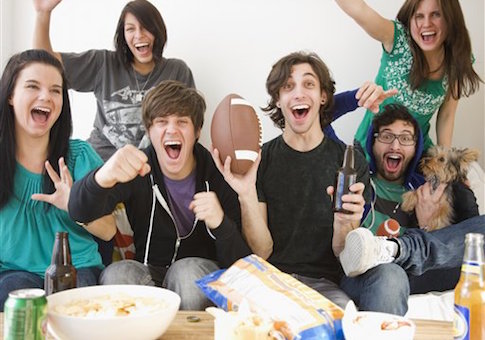
I think I have a lot in common with my customer avatar, in fact I am the customer avatar! I am a 21 year old college student. I do not think this is a coincidence, because I chose this segment because I wanted to choose one in which I could relate to the most.
Tuesday, October 16, 2018
16A
1. I think the five most unique things that describe my human capital is as follows:
Interview 2: Dad: My dad thought my best human capital traits were my drive and ambition. He said that since I was a kid, I always strive to achieve my best results, no matter how much work it took. He also said I was always extremely motivated throughout my life.
Interview 3: Nana: My Nana thought that my best human capital trait was how smart I am. She believes throughout my entire college and high school life, that I have gained sufficient knowledge to do whatever I set my mind to.
Interview 4: Alex (Close Friend): Alex believes that my best notion of human capital is my ability to solve problems. He said that ever since I was young, whenever I ran into a problem, I was always able to find a remedy to fix it.
Interview 5: Frank (Close Friend): Frank thought my best human capital quality was my ability to assess situations. He said that I tend to make the right decisions when under stress or duress.
3. From these interviews, I was mostly correct about assessing myself. The people who know me best recognize my hard-working attitude, my ability to adapt to my situations, and the competitiveness and rigor that I attack life with. I do no think I need to switch any of my self-assessments, as the people who know me best seemed to come up with the same things that I did. Know yourself.
- Determination: When I set my mind to something, I make sure it gets done. You will never see me give up on something if it is not completed. I am always focused on my end goal.
- Diversity: I have taken a numerous set of classes throughout my life, so I believe I have a diverse knowledge base. I think that I am proficient in a lot of different areas.
- Realist: I try to set goals that I realistically think I can accomplish. There is no reason to waste my time on things that I cannot realistically do, no matter how much I want them. For years, I wanted to be a professional sports player. However, I now know that this is impossible, so I have changed my limits on that.
- Motivated: I always try to do the best job that I can. I do not like to settle for less than what I know I can achieve.
- Level-headed: I make decisions based off of their efficiencies and their cost-effectiveness. I do not let emotions get in the way of this. For this reason, I tend to make the decisions that are best for me.
Interview 2: Dad: My dad thought my best human capital traits were my drive and ambition. He said that since I was a kid, I always strive to achieve my best results, no matter how much work it took. He also said I was always extremely motivated throughout my life.
Interview 3: Nana: My Nana thought that my best human capital trait was how smart I am. She believes throughout my entire college and high school life, that I have gained sufficient knowledge to do whatever I set my mind to.
Interview 4: Alex (Close Friend): Alex believes that my best notion of human capital is my ability to solve problems. He said that ever since I was young, whenever I ran into a problem, I was always able to find a remedy to fix it.
Interview 5: Frank (Close Friend): Frank thought my best human capital quality was my ability to assess situations. He said that I tend to make the right decisions when under stress or duress.
3. From these interviews, I was mostly correct about assessing myself. The people who know me best recognize my hard-working attitude, my ability to adapt to my situations, and the competitiveness and rigor that I attack life with. I do no think I need to switch any of my self-assessments, as the people who know me best seemed to come up with the same things that I did. Know yourself.
15A
1. The segment I have targeted for my Arcade Bar concept is based off of demographics. I am targeting college aged kids, who most likely come from affluent families. I was able to find three of these types of people in a bar in mid-town Gainesville. These are the results I found.
2. In terms of college kids choosing bars, all three of them agreed the thing that matters most to them is price. They do not want to go to a bar with $7 beers, $10 liquor shots, etc. Instead, they will substitute cheaper items for higher quality. This allows them the opportunity to purchase more items throughout the night as well. The same thing goes for a cover fee as well. They would rather go to a less popular bar if it means they do not have to pay just to walk in the door. In terms of the style mattering for picking which bar to go to, the only consistent answer I received is that they prefer not to go to the bars that are filthy. The actual style or setup of the bar does not matter as much to them. Price is definitely the most important factor with my segment that I have chosen.
3. In terms of where my segment is most likely to purchase, this one is obvious. This age group is not likely to be purchasing alcohol online, and they surely cannot attend any online bars, unless for some reason you are still on Club Penguin? One of my interviewees said you only carries cash to a bar, to make sure he puts a limit on how much he could spend. The other two said they have no preferences as to whether they will use cash or a card inside the bar. Thus, this is not really an example of a B2B purchase, it is more of an impulse buy. The consumer is solely up to his/her own purchasing decisions in this case as well.
4. The post-purchase decisions of going to a bar are usually all over the place. One of the people I interviewed said she usually regrets making all of the purchases from the night before, especially if she had too much to drink. Another of them said that he looks back on his purchases, and judges their merit on how enjoyable his night was. If he had a good night, he said the purchases were worth it, and vice versa. The third person said he viewed his purchases as sunk costs. He gained use from the purchases for a set time, and then they no longer served him any purpose.
5. From my findings, it is easy to assess that my segment is mostly worried about pricing when influencing what bar they wish to go to. On top of that, this good is a type of service where you will only purchase it in person, you have no need for an online version. All three of these people gave me similar answers in terms of the basic things they search for in a bar: cheap prices, not grimy, decent music, and bars that have some things to do inside of them (games, pool, darts, etc.).
6. After conducting these interviews, I would describe this segment in terms of alternative evaluation as follows: If they can find a decent, cheaper bar to go to, they will definitely go there. In terms of purchase decisions: most people will purchase the best deals that the bar has to offer, most do not go for the more expensive, or "luxury items". Post-purchase evaluations are the most variable element of this segment. Each person I interviewed placed a different value system on their nights out at bars.
2. In terms of college kids choosing bars, all three of them agreed the thing that matters most to them is price. They do not want to go to a bar with $7 beers, $10 liquor shots, etc. Instead, they will substitute cheaper items for higher quality. This allows them the opportunity to purchase more items throughout the night as well. The same thing goes for a cover fee as well. They would rather go to a less popular bar if it means they do not have to pay just to walk in the door. In terms of the style mattering for picking which bar to go to, the only consistent answer I received is that they prefer not to go to the bars that are filthy. The actual style or setup of the bar does not matter as much to them. Price is definitely the most important factor with my segment that I have chosen.
3. In terms of where my segment is most likely to purchase, this one is obvious. This age group is not likely to be purchasing alcohol online, and they surely cannot attend any online bars, unless for some reason you are still on Club Penguin? One of my interviewees said you only carries cash to a bar, to make sure he puts a limit on how much he could spend. The other two said they have no preferences as to whether they will use cash or a card inside the bar. Thus, this is not really an example of a B2B purchase, it is more of an impulse buy. The consumer is solely up to his/her own purchasing decisions in this case as well.
4. The post-purchase decisions of going to a bar are usually all over the place. One of the people I interviewed said she usually regrets making all of the purchases from the night before, especially if she had too much to drink. Another of them said that he looks back on his purchases, and judges their merit on how enjoyable his night was. If he had a good night, he said the purchases were worth it, and vice versa. The third person said he viewed his purchases as sunk costs. He gained use from the purchases for a set time, and then they no longer served him any purpose.
5. From my findings, it is easy to assess that my segment is mostly worried about pricing when influencing what bar they wish to go to. On top of that, this good is a type of service where you will only purchase it in person, you have no need for an online version. All three of these people gave me similar answers in terms of the basic things they search for in a bar: cheap prices, not grimy, decent music, and bars that have some things to do inside of them (games, pool, darts, etc.).
6. After conducting these interviews, I would describe this segment in terms of alternative evaluation as follows: If they can find a decent, cheaper bar to go to, they will definitely go there. In terms of purchase decisions: most people will purchase the best deals that the bar has to offer, most do not go for the more expensive, or "luxury items". Post-purchase evaluations are the most variable element of this segment. Each person I interviewed placed a different value system on their nights out at bars.
Subscribe to:
Posts (Atom)